
Moorish Ascó
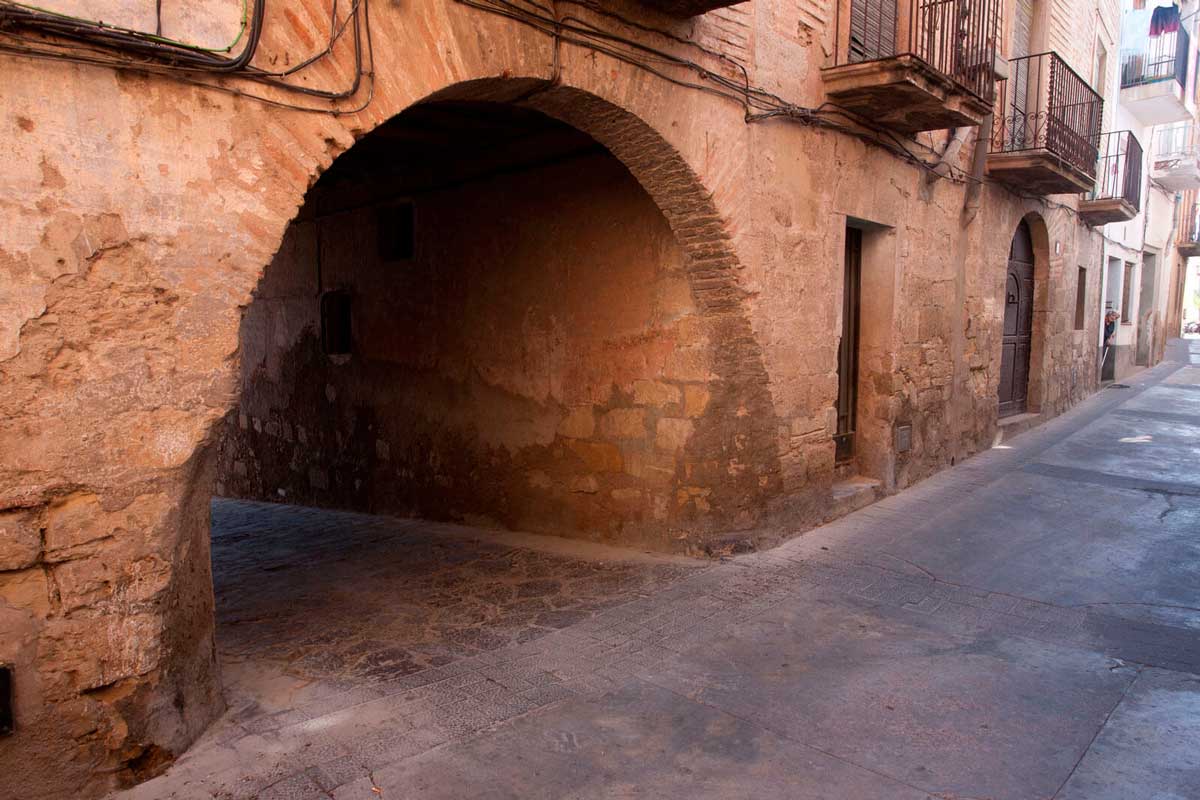
The coexistence between cultures continued to deteriorate until the Moors were expelled from the Iberian Peninsula
It entered a period of decline, where most of the treasures that had been forged in Ascó were in danger. Population was lost, agricultural production decreased and fluvial trade decreased.
THE HOSPITALLERS
In the beginning of the 14th century, after the Order of the Temple abolition (1312), Ascó became a hospitaller encomienda under the Amposta castellany. The hospitaller encomienda of Ascó, according to Pere el Cerimonios’ census in the second half of the 14th century, comprised the following municipalities: Berrús, Riba-roja, Ascó, les Camposines, la Fatarella, Vilalba, Vinebre and la Torre de l’Espanyol.
Ascó’s encomendero owned a house in the village, still preserved in the second half of the 19th century, that received the name Casa del Encomendador. The encomendero was in charge of the population’s government and took part in the war against Joan II. To the castle of Ascó came, from Aitona, the prince of Viana Carles d’Aragó and from there, he was moved to Zaragoza, prior to the time of the war mentioned. During that war, the archbishop of Zaragoza’s forces, the order of Saint John, took over Ascó in 1466.
THE INNER AND OUTER UNIVERSITIES
It is worth saying that, around 1510 the Saracen population was already fully Christian. They were the ancient Moors or new Christians and they were different from the old Christians. Around 1562, it is known that Ascó had two universities, the inner (with new Christians, replacing the aljama) and the outer (old Christians) which would be unified later on in 1509. Both of them, the new Christians or inner university and the old Christians or outer university, had their own order.
Ascó Muslims increased from 56% (1329), 77.5% (1380), 80.31% (1497) to 82% (1600). First Sarrasin and then Moor, the Muslim population in Ascó prevailed until their expulsion.
THE MOOR EXPULSION AND THE DISSAPEARANCE OF THE TREASURES
According to Henri Lapeyre, in Geographie de l’Espagne Morisque, Ascó was one of the villages in the Catalan Ebro with a higher Moor population. The consequences of the Moors expulsion from Ascó (35% of the population) were so ill-fated that in 1615 the village counselors wrote: “… the village remains today deserted, without universities, its houses ruined and destroyed, and the fields and vineyards and olive trees and mulberries devoid of people that cultivate them, headed to the same ruin and destruction, greatly diminishing the yields of the encomienda”.
The mistaken royal decision brought not only misery and desolation to the fertile riverside lands of the two greatest rivers in Catalonia, but filled the hearts of all the Catalans that witnessed the expulsion of such a fair people with grief and sadness.
GETTING INTO THE MOORISH PAST OF ASCÓ
With the consolidation of Christianity, Ascó slowly recovered its economic, social and cultural activity. The leading figure of the encomendador appeared, the person who ruled over Ascó, and the first manor house associated to a noble title in Ascó, Cal Cavaller. The village split in two, the Christian area and the Moor area, both with internal and external connections through the gates.
The gentleman's tent
Hi havia les dependències de l’aljama i la mesquita i on es cobraven els impostos.
Cal Cavaller
Cal Cavaller is one of the best Renaissance works of the Ribera d'Ebre, the noble coat of arms on the facade stands out.
Fusion of Styles
One of the most notable buildings in Ascó that stands out for presenting different architectural styles
House of the Commander
House of Commander Sapata, who was in charge of governing the town.